
Preserving The Cultural Heritage of The Forcibly Displaced Artsakh Armenians is Not Only a Matter of Preserving Objects, Collections and Digital Archives. Sergey Shahverdyan
On his Facebook page Shahverdyan Sergey writes
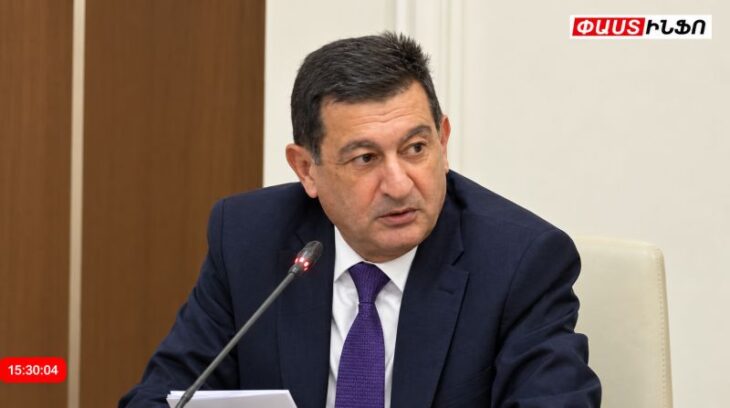
Yesterday, I participated in parliamentary discussions on the socio-economic and other rights and status of forcibly displaced Artsakh Armenians. The discussion was initiated by the parliamentary human rights committee.
For me, this discussion was important not only because I spoke for the first time not so much about the cultural heritage of Artsakh, but also about the cultural rights of its carriers.
I formulated this idea in one phrase:
“Today, I will be talking not about cultural heritage, but about a person – the carrier of this heritage.
“Indeed, there is a very serious problem here.
We can digitize documents, create electronic databases, compile registers of monuments and record their condition. All this is necessary.
But what will happen to the intangible heritage?
If a master has no opportunity to pass on his knowledge and skills to students, then in 5-10 years, part of this knowledge may be lost without the possibility of full restoration.
This is not only about crafts. It is about language and dialect, traditional games, songs and music, oral stories, customs, local knowledge, forms of art and other practices that exist only when someone knows, uses and passes them on.
Therefore, preserving the cultural heritage of the forcibly displaced Artsakh Armenians is not only a matter of preserving objects, collections and digital archives.
This is primarily a matter of creating conditions for the transmission of culture from one generation to another.
Armenia must create opportunities for knowledge bearers to teach children and young people, to create cultural communities, to preserve language, traditions, games, artistic and craft practices.
Because the disruption of the continuity of knowledge inevitably leads to the disruption of the cultural continuity of generations.
And in the end, the question is very simple: will the unique culture of the Artsakh Armenians remain a “living culture” that is continued and passed on, or will it gradually turn into only a memory of the past?